
The night Britain gets an hour back
The clocks go back on Sunday 25 October. The history behind the extra hour, what happens across Europe, and a small check round the home.
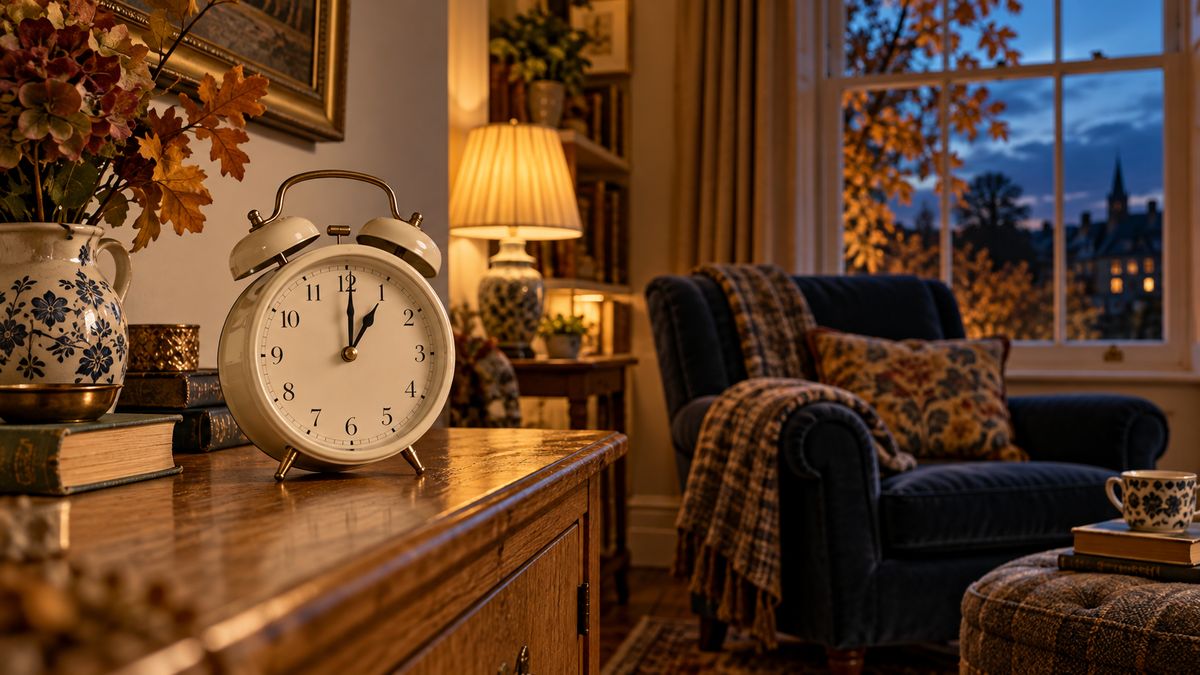
There is usually one clock in the house that escapes attention: the oven, the old alarm beside the bed, or the one above the kitchen door. On Sunday 25 October 2026, it will be an hour ahead of the rest. At 2am, Britain’s clocks go back to 1am as British Summer Time gives way to Greenwich Mean Time. It buys us an extra hour that night, though anyone up with a small child may struggle to claim it. By the following afternoon, the earlier dusk will be harder to miss.
Dates and sources checked: 9 October 2026.
A builder’s campaign
William Willett made a serious British proposal in his 1907 pamphlet The Waste of Daylight. He died in 1915. Germany adopted daylight saving in 1916 and Britain followed a few weeks later.
During the Second World War, Britain used Double Summer Time—two hours ahead of GMT in summer—and kept an extra hour in winter. The later British Standard Time experiment kept GMT+1 throughout 1968–71. After a review, MPs voted in December 1970 to end it. The trade-offs included darker winter mornings, particularly in the north.
What happens across Europe?
EU countries also return to standard time on the last Sunday of October, so the date this year is 25 October. The change is coordinated at 1am GMT: that is 2am summer time in Britain and 3am in mainland France, Germany and Spain, where clocks return to 2am.
You may remember headlines saying Europe would stop changing its clocks. A proposal was introduced in 2018, but the Council of the EU says no final decision has been taken. The existing system remains in place. Its reference page was last updated on 20 August 2026.
A small Sunday-morning walk round
Many connected devices adjust automatically, but check their settings. Look at the oven, boiler programmer, thermostat, outdoor-light timer and any clock used for an appointment. Follow the device instructions before changing a heating programme.
Test smoke and heat alarms as part of the round. Scottish Fire and Rescue Service recommends testing smoke alarms every week: October’s clock change is a reminder, not the whole schedule.
Then make the evening feel welcoming. Try a reading lamp beside the chair and a softer light at the other end of the room. A pool of warm light can make an autumn evening feel quite different without changing the room itself.