
Europe is unfixing the fitted kitchen
At EuroCucina 2026 the kitchen started to look like furniture again. So why do we assume a new-build kitchen should be permanent?
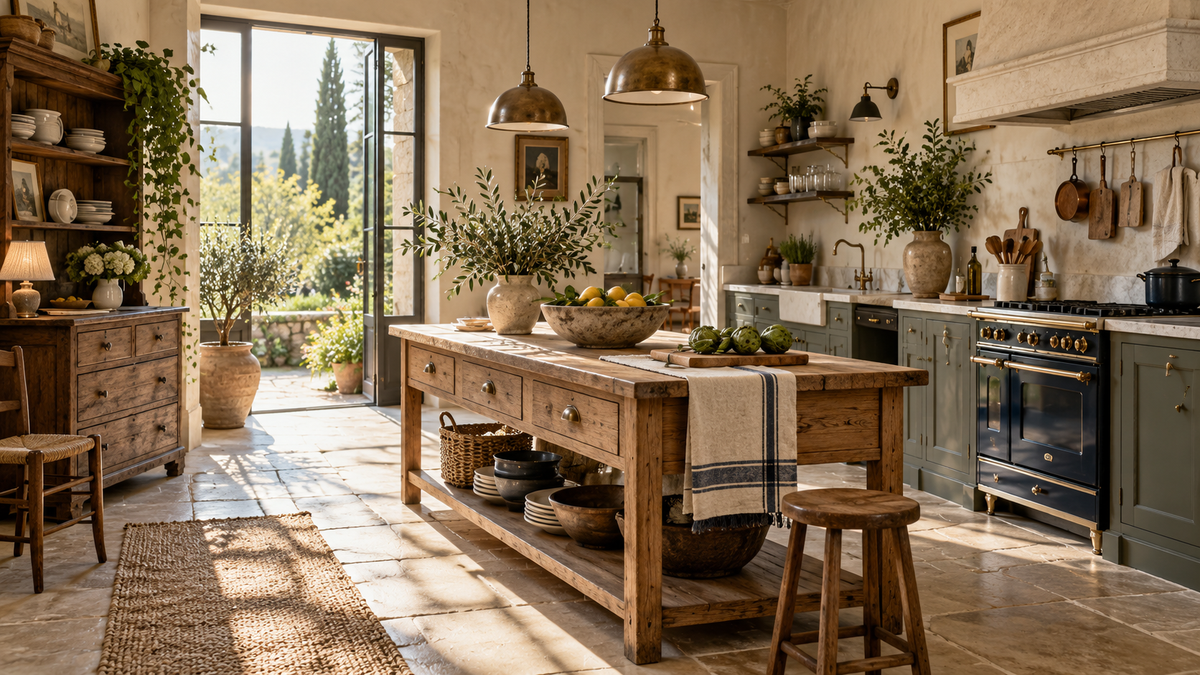
The kitchen is becoming furniture again
For decades, the fitted kitchen has been treated almost like part of the building itself. Cabinets are screwed to walls, appliances disappear behind matching doors and every centimetre is designed to look permanent.
But across European design, that assumption is beginning to loosen.
At EuroCucina in Milan, kitchens increasingly behaved like rooms furnished over time rather than installations intended to remain untouched for twenty years. Kitchens were presented as furnishing rather than fixtures: islands and surfaces that run on into the living space, modular units on minimalist steel structures, and kitchens that open onto the rest of the home.
It is a subtle change, but potentially an important one for new-home buyers.
Why should the first kitchen be the forever kitchen?
A new-build buyer is usually presented with the kitchen as a decision to make before moving in: choose the doors, worktop, handles and perhaps an upgrade package.
Once installed, changing your mind can become expensive.
A more flexible kitchen turns that logic around. Keep the elements that benefit from being permanent — plumbing, electrics, ventilation and durable work surfaces — while allowing some storage and furniture to change as the household changes.
A young couple may want something different five years later. Children arrive. Working from home changes how space is used. Appliances change. Tastes certainly do.
A kitchen designed to evolve has a chance of ageing more gracefully than one designed as a finished showroom.
Milan is already experimenting
European manufacturers and designers are pushing this idea in different directions: kitchens that resemble living-room furniture, islands that feel more like tables and cabinets designed as individual objects rather than one continuous fitted installation.
Another Milan installation — a sponsored Domus project with Haier Europe — went further still, linking the kitchen to the wider living environment.
That does not mean every European idea belongs in a British new-build. It does suggest that the conventional fitted kitchen is no longer the only serious answer.
What this means for a new-build buyer
Before spending heavily on builder kitchen upgrades, ask a slightly different question:
Which parts of this kitchen really need to be permanent?
Good plumbing, sufficient electrical provision, extraction, sensible lighting and a sound basic layout can be worth getting right from day one.
The decorative layer is different.
Doors can change. Furniture can move. Storage can evolve. A freestanding piece found five years from now might give the room more character than another bank of matching units bought before you even received the keys.
Perhaps the most modern kitchen isn’t the one with the most technology or the longest specification.
Perhaps it’s the one that leaves you somewhere to go next.
Sources
- EuroCucina 2026 novelties Salone del Mobile.Milano · 23 April 2026 · The fair's organiser
- Fuorisalone 2026: what to see, day 6 Domus · 25 April 2026
- What a kitchen: exploring a space in constant design Domus · Labelled Sponsored content by Domus; presented by Domus and Haier Europe