
October in a new-build garden
Spring bulbs, insect hotels, swift and bat boxes—and hedgehog motorways. Small steps towards a garden with room for wildlife.
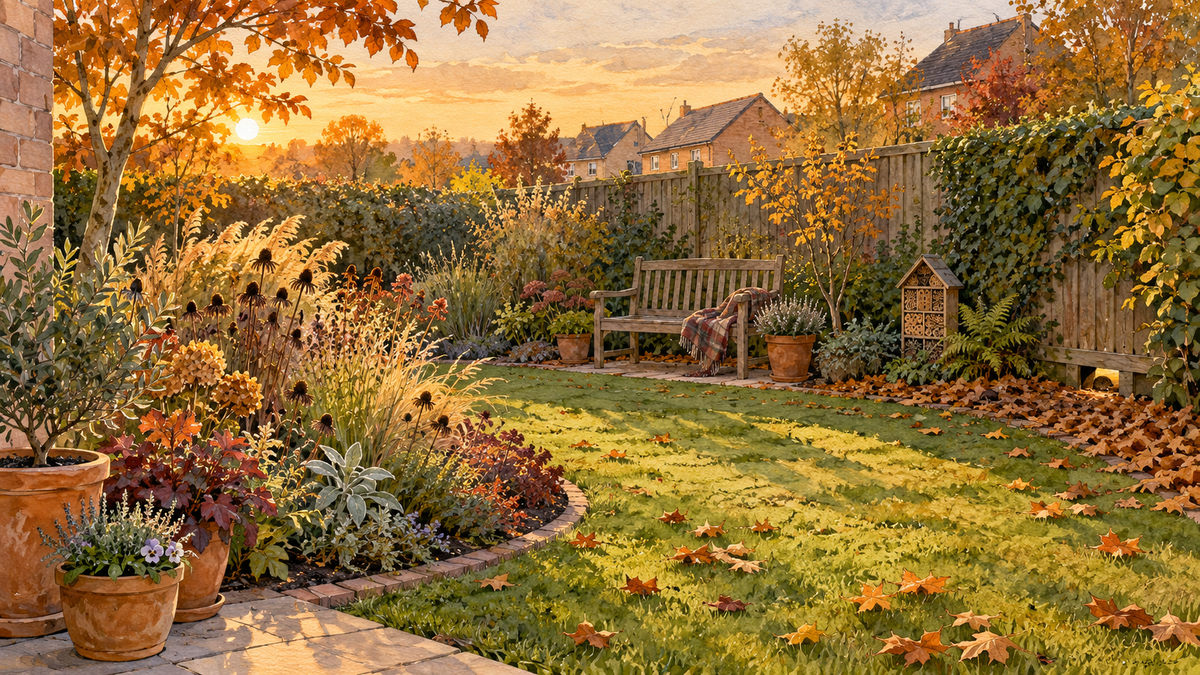
A new garden does not need to be finished before winter. October is a good month to understand the ground, put a little colour in reserve for spring and decide what can wait.
Sources checked: 9 October 2026.
First, look below the lawn
The RHS notes that new-build soil can be compacted, poor quality or contain construction debris. Inspect the areas you intend to plant before buying a border’s worth of shrubs. Record visible problems with dated photographs and raise them with the developer where appropriate.
After rain, note where water collects and how long it remains. If substantial ground work is needed, understand the soil and any buried services before starting. A small inspection tells you more than an expensive planting scheme drawn without seeing the ground.
Plant bulbs at the right depth
Autumn is planting time for many spring-flowering bulbs, but timing and depth differ by species. Follow the packet or specific planting guidance. The RHS’s general rule is two to three times the bulb’s depth; tulips are usually planted in November.
Do not plant deeper simply because the soil is compacted. Most bulbs need a well-drained position. If the border is not ready, a container with drainage holes can hold a small spring display while you work out the permanent planting.
Give new turf time
The RHS advises leaving newly laid turf undisturbed for several weeks so roots can establish. Keep off waterlogged ground, too: walking over it can worsen the surface conditions. Photograph persistent pooling, gaps or lifting edges rather than repeatedly walking over them to investigate.
Tidy the route; leave some shelter
Clear the path to the door and the area you use every day. Elsewhere, keep suitable standing seedheads and a quiet corner with leaves and woody material. The RHS describes seedheads as winter interest and a resource for wildlife, and leaf litter and log piles as habitat.
Hedgehog motorways, one fence at a time
A single welcoming garden is better when it connects to the next. Hedgehog Street recommends a 13cm by 13cm gap at ground level so hedgehogs can pass between plots. Agree boundary changes with neighbours and the relevant owner, check that the route leads somewhere suitable, and keep the opening clear.
A row of connected gardens offers a route to food and shelter. A small sign above the gap can stop someone accidentally blocking it during a tidy-up.
Insect hotels: shelter before show
The RHS recommends a bug hotel in a sheltered position and leaving healthy hollow stems standing until early spring. Start with useful nooks: a small log pile, leaf litter and hollow plant stems. These are habitats in their own right; a large ornamental hotel is not required.
If you build a hotel, secure it and give it a roof that keeps the shelter dry. The RHS’s construction guide explains suitable materials and positions.
A high home for swifts
This is a house-wall project rather than a low garden bird box. The RSPB recommends a swift box tightly under the eaves, at least 5m above the ground, with a clear approach and protection from direct sun, usually on a north- or east-facing wall.
Use an appropriate installer for work at height and check the fixing and any permissions before fitting. Plan for the next nesting season; a new box may take time to be adopted.
A bat box needs a different position
The Bat Conservation Trust recommends boxes where bats feed and navigate, near hedges or tree lines, ideally at least 4m high where safe installation is possible. Keep them away from artificial lights and strong winds, with some sun during the day.
These are different requirements from a shaded swift box. Follow the guidance for the box and site rather than placing every wildlife home together. Bats may take months or years to arrive. The Trust says bat boxes must only be opened by a licensed bat worker: observe from outside.
A little continental warmth
For the view from indoors, try one sheltered seat, a simple pot and a clear shape in the planting. Borrow the mood of a courtyard rather than its climate: choose plants for your actual soil, exposure and winter conditions.
One corner that feels considered is a useful October goal. The rest can grow into itself.
Sources
- RHS: getting started with a new-build garden
- RHS: planting bulbs
- RHS: October lawn care
- RHS: waterlogged lawns
- RHS: winter seedheads
- RHS: hedge and woodland-edge habitats
- Hedgehog Street: linking gardens
- RHS: helping wildlife through winter
- RHS: building a bug hotel
- RSPB: a high home for swifts
- RSPB: swift nesting and new boxes
- Bat Conservation Trust: siting bat boxes